


Few garments have enjoyed a longer run at the top of menswear than the Italian blazer. It has survived every trend cycle since the mid-twentieth century – the power shoulders of the Eighties, the slim-cut minimalism of the Nineties, the deconstructed wave that followed – and come out the other side looking, if anything, more relevant than when it started. That kind of longevity doesn’t happen by accident. It happens because a garment is genuinely useful, and because the people making it understand something fundamental about how men want to dress.
What Italian tailoring has always grasped is that a blazer isn’t one thing. It’s a category broad enough to hold multitudes, and the best Italian houses have spent decades proving exactly that.
Start with the classic single-breasted. In a fine pure wool (130s or higher), it remains the cornerstone of any serious wardrobe. The Italian version typically favours a softer shoulder than its British counterpart and a slightly longer body, with a suppressed waist that flatters without constraining. It moves well, it travels well. Worn with tailored trousers for a board meeting or thrown over dark denim for dinner, it does its job without demanding any effort from the wearer. That’s the whole point.
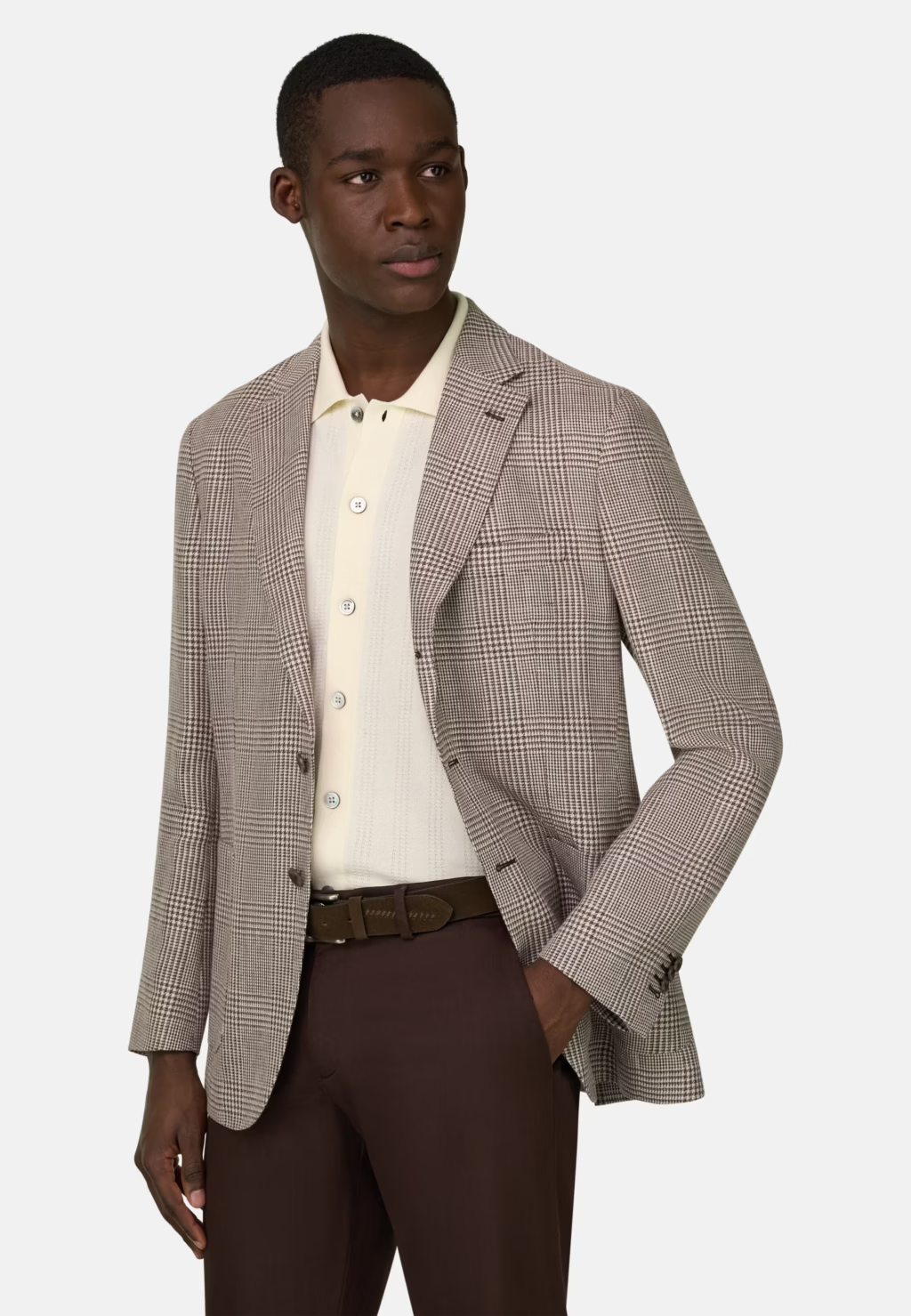
Then there’s herringbone, a pattern so embedded in Italian menswear tradition that it barely registers as a choice anymore; in many Milanese wardrobes, it simply is a blazer. The appeal lies in its texture: from a distance it reads as a solid; up close it reveals depth and craftsmanship. Cut in cotton or a cotton-blend jersey rather than heavy tweed, it becomes something genuinely versatile – smart enough for the office, relaxed enough for a weekend in the country.
Among Italian blazers for men, the wool-mohair blazer occupies a slightly different register. That distinctive, subtle sheen, long associated with Italian summer suiting, gives it a dressier quality without tipping into formality. Navy is the classic choice – reliable, sharp, flattering against almost every complexion – but it also works beautifully in indigo tones or deep forest green. A well-cut wool-mohair blazer at a summer wedding or an evening event signals taste rather than effort, which is, again, the Italian ideal.
What’s been quietly significant in recent years is the rise of the jersey blazer – a jacket cut with the precision of tailoring but built from performance-adjacent fabrics that stretch and breathe rather than restrict. The B-Jersey and sweatshirt-jacket styles emerging from Italian makers represent something genuinely new: garments that look immaculate from across a room and feel almost casual to wear. For a generation that increasingly refuses to choose between looking polished and feeling comfortable, this is exactly the right answer.
Fit, as ever, matters enormously. Italian blazers tend to offer more variety than most, from extra-slim cuts for those who want sharp definition to relaxed, oversized shapes that suit the current appetite for ease and proportion. The choice isn’t really about occasion – it’s about personal language: how you want to read in a room, what you want the jacket to say before you’ve said a word.
That range – formal to casual, classic to contemporary, structured to fluid – is what makes the Italian blazer such a durable proposition. It isn’t one garment. It’s a whole vocabulary.


